Ecolibra = Natural Equilibrium
INGREDIENT PROFILE
Oat Oil
Avena Sativa (Oat) Kernel Oil
Category: Plant Oils & Butters
Functions: Barrier Support · Emollient
Used In Products: Upcoming Calm Line
A naturally derived botanical oil rich in fatty acids and skin-conditioning lipids that helps soften, nourish, and support the skin’s natural moisture barrier while maintaining a smooth, comfortable feel.
ORIGIN
Oat Plant
SOURCE
Oat Grain Kernels
TEXTURE
Smooth, Silky & Fluid
What Is Oat Oil?
Oat oil is a plant-based oil extracted from the kernels of the oat plant (Avena sativa), a cereal grain cultivated in temperate regions around the world.
Unlike colloidal oatmeal, which is made by finely grinding whole oat grains, oat oil is produced by extracting the naturally occurring fats found within the grain. Depending on the extraction process, the resulting oil may then be filtered or refined for cosmetic use.
Known for its smooth consistency and unique combination of fatty acids and other naturally occurring lipids, oat oil is valued in skincare for its ability to condition dry skin and complement formulations designed to support the skin’s protective barrier.
SKIN BENEFITS
Benefits For Skin
Supports the Skin Barrier

Oat oil contains linoleic acid, an essential fatty acid involved in maintaining the skin’s protective lipid barrier. Its naturally occurring lipids make it a valuable complementary ingredient in formulations designed to support moisture retention and maintain skin comfort, particularly for dry, sensitive-feeling skin.
Softens & Smooths

Oat oil acts as an emollient, helping soften rough, dry skin and improve its overall texture. Its fatty acid-rich composition leaves the skin feeling smooth, supple, and conditioned while contributing to a comfortable moisturizing finish.
UNDERSTANDING THE INGREDIENT
The Science Behind It
Oat oil’s skin-conditioning properties come primarily from its combination of fatty acids, particularly 45% oleic acid and 35% linoleic acid, along with 15% palmitic acid and smaller amounts of other naturally occurring lipids, giving it a balance of polyunsaturated and monounsaturated fatty acids.
Oleic Acid
Softness & Conditioning

Oleic acid is a monounsaturated omega-9 fatty acid that contributes to oat oil’s fluid consistency and smooth spreading properties.
Its presence in the oil’s triglycerides helps provide a conditioning feel, allowing oat oil to distribute across the skin and complement other moisturizing ingredients.
Linoleic Acid
Essential Fatty Acid & Barrier Support

Linoleic acid is an essential omega-6 fatty acid that plays an important role in maintaining the skin’s protective barrier.
It is incorporated into certain types of ceramides, particularly acylceramides, which help organize the protective lipid structures between skin cells.
These structures are important for maintaining the integrity of the outermost skin layer, limiting excessive moisture loss, and supporting the skin’s natural protective functions.
Palmitic Acid
Skin Conditioning & Barrier Support

Palmitic acid is a saturated fatty acid, naturally present in the skin’s lipid structures, contributing to the organization and integrity of the skin’s moisture barrier.
Palmitic acid is primarily bound within triglycerides, contributing to the oil’s emollient properties and rich, conditioning feel.
Naturally Occurring Oat Lipids
Skin Conditioning & Barrier Function

Beyond its fatty acids, oat oil contains smaller amounts of other lipids, including ceramides, phospholipids and glycolipids, contributing to oat oil’s distinctive lipid composition.
Laboratory research has found that oat lipid extracts can influence pathways involved in ceramide production and skin cell differentiation.
Ceramides are essential components of the skin’s natural barrier, helping maintain the organization of the lipids between skin cells.
How They Work Together
Oat oil’s fatty acids are primarily present as triglycerides, which contribute to its liquid consistency, spreading characteristics, and emollient properties.
Its linoleic acid content is particularly important, as this essential fatty acid helps maintain the skin’s natural moisture barrier. Meanwhile, oleic acid contributes to the oil’s softening and conditioning properties, while palmitic acid provides additional emollient benefits. Together, these fatty acids help support skin softness, hydration, and moisture retention.
Beyond these fatty acids, oat oil contains additional oat lipids, which distinguish its composition from many conventional botanical oils. These compounds may provide complementary skin-conditioning benefits through their interactions with the skin’s natural lipid structures, supporting processes associated with skin barrier function, including ceramide production and lipid organization.
When applied to the skin, these components work together to strengthen the skin’s natural moisture barrier and soften and condition the outermost layer, while leaving behind a lipid-rich film that can help slow moisture evaporation.
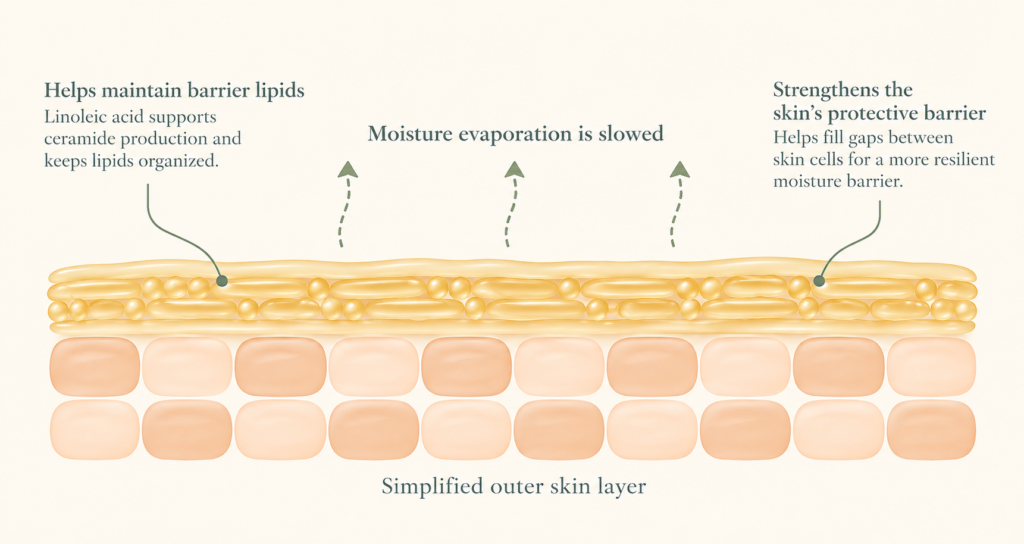
Unlike humectants such as glycerin, oat oil does not primarily attract water into the skin. Instead, it provides emollient properties and fatty acids relevant to normal skin barrier function.
OUR FORMULATION PHILOSOPHY
Why Ecolibra Uses It
We chose oat oil for its balanced fatty acid composition, skin-conditioning and moisture retention properties, and potential to improve skin barrier function.
We currently do not source certified organic oat oil, as it is not readily available in that form. This reflects our commitment to thoughtfully selected ingredients and transparency about their origins.
In our Calm line, oat oil helps condition dry skin, maintain softness and comfort, and contribute to a rich, conditioning layer that reduces moisture loss.
Our approach is to combine ingredients with complementary properties, creating balanced formulations that help nourish, soften, and support the skin’s natural moisture barrier.
Good to Know
Although oat oil and colloidal oatmeal come from the same plant, they are not interchangeable ingredients.
Colloidal oatmeal contains a broader range of oat components, including starches, proteins, beta-glucans, and other compounds, while oat oil primarily provides the grain’s lipid-rich fraction. This distinction is important because much of the research surrounding oats and soothing irritated skin involves colloidal oatmeal or specialized oat extracts rather than oat oil alone.
Oat oil’s fatty acid composition also makes it different from both high-linoleic sunflower oil and oleic-rich avocado oil, offering another combination of lipids for moisturizing formulations.
Because oat oil contains unsaturated fatty acids, proper storage and thoughtful formulation are important for maintaining its quality and limiting oxidation.
As with any skincare ingredient, individual skin tolerance varies. Those with particularly reactive skin should introduce new products gradually.
EXPLORE ECOLIBRA
Found in our Products
Discover how oat oil works alongside other purposeful ingredients in our formulations.

Upcoming Calm Line
A product line tailored towards soothing sensitive and irritable skin
Newsletter Updates
Subscribe for 10% off your first order and special offers.