Ecolibra = Natural Equilibrium
INGREDIENT PROFILE
Vegetable Glycerin
Glycerin
Category: Hydrators & Soothers
Functions: Humectant · Solvent
Used In Products: Face Cream, Face Cleanser, Body Cleanser, Hand Lotion
A plant-derived humectant that attracts and retains moisture, helping hydrate, soften, and maintain the skin’s natural moisture balance for a smooth, comfortable feel.
ORIGIN
Oil Palm
SOURCE
Palm Fruit Oil
TEXTURE
Clear, Thick & Syrupy
What Is Vegetable Glycerin?
Vegetable glycerin, also known as glycerol, is a naturally occurring compound derived from plant-based fats and oils. Ecolibra specifically uses glycerin sourced from palm oil, which is obtained from the fruit of the oil palm (Elaeis guineensis), native to West Africa and widely cultivated in tropical regions around the world.
Palm oil naturally contains triglycerides, molecules made up of fatty acids attached to a glycerol backbone. During processing, these triglycerides are broken down to separate glycerin from the fatty acid components. The glycerin is then purified to produce a clear, odorless, and highly water-soluble liquid suitable for cosmetic use.
Unlike botanical oils, glycerin contains no fatty acid chains and does not have an oily texture. Instead, it has a thick, syrupy consistency and a remarkable ability to attract and retain water.
Known for its exceptional moisture-binding properties, glycerin is one of the most widely used humectants in skincare, helping maintain hydration and improve the softness and flexibility of the skin.
SKIN BENEFITS
Benefits For Skin
Attracts & Retains Moisture
Glycerin acts as a humectant, attracting and binding water within the skin’s outermost layer. This helps improve hydration and maintain a comfortable moisture balance, particularly for skin prone to dryness.
Softens & Improves Skin Flexibility
By increasing the water content of the outermost skin layer, glycerin helps improve softness, smoothness, and flexibility. Proper hydration also supports normal skin barrier function, helping the skin maintain a healthy, conditioned appearance.
UNDERSTANDING THE INGREDIENT
The Science Behind It
What makes glycerin particularly effective is its simple but highly functional molecular structure. Glycerin is a small, water-soluble molecule with the chemical formula C₃H₈O₃, containing three hydroxyl groups that allow it to interact with water. Unlike botanical oils and butters, which contain fatty acids and other lipids, glycerin works primarily through its ability to bind and retain moisture.
Hydroxyl Groups
Water Attraction & Retention
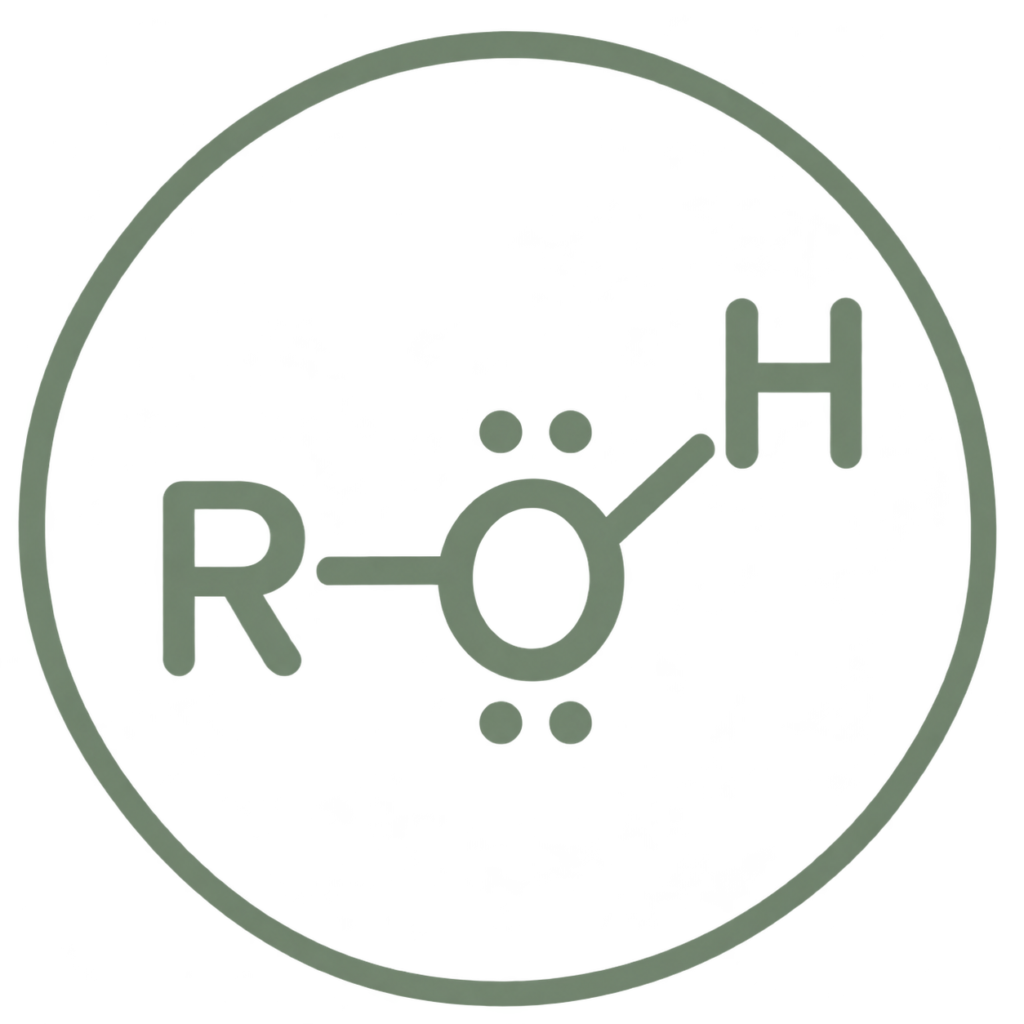
Glycerin contains three hydroxyl groups, each capable of forming hydrogen bonds with water molecules.
These interactions allow glycerin to attract and hold water, making it highly effective at increasing and maintaining hydration within the skin’s outermost layer.
Rather than forming a protective oil layer, glycerin works by improving the skin’s ability to retain water.
Naturally Occurring Glycerol
Skin Hydration & Barrier Function

Glycerol is also naturally present in human skin, where it contributes to maintaining moisture balance.
Research has identified glycerol as an important component of the skin’s natural moisturizing system, helping support hydration, flexibility, and normal barrier function.
The skin contains specialized transport proteins called aquaporins, particularly aquaporin-3 (AQP3), which help transport water and glycerol through certain skin cells.
Research suggests that naturally occurring glycerol plays an important role in maintaining the hydration and mechanical properties of the outermost skin layer.
How They Work Together
Glycerin’s moisturizing properties come from its ability to bind water, its compatibility with water-based ingredients, and its contribution to maintaining hydration within the skin’s outermost layer.
When applied to the skin, glycerin helps increase moisture content by attracting and retaining water within the outermost skin cells. This improves skin softness and flexibility while supporting the conditions needed for normal barrier function.
Research has demonstrated that glycerin-containing formulations can improve skin hydration, with some studies also showing improvements in barrier function. However, these effects depend on the concentration and overall formulation.
Unlike botanical oils and butters, glycerin does not primarily work by creating a protective lipid layer that slows moisture evaporation. Instead, it complements ingredients such as rosewater, which provides a water-based foundation, and botanical oils, which help soften the skin and reduce moisture loss.
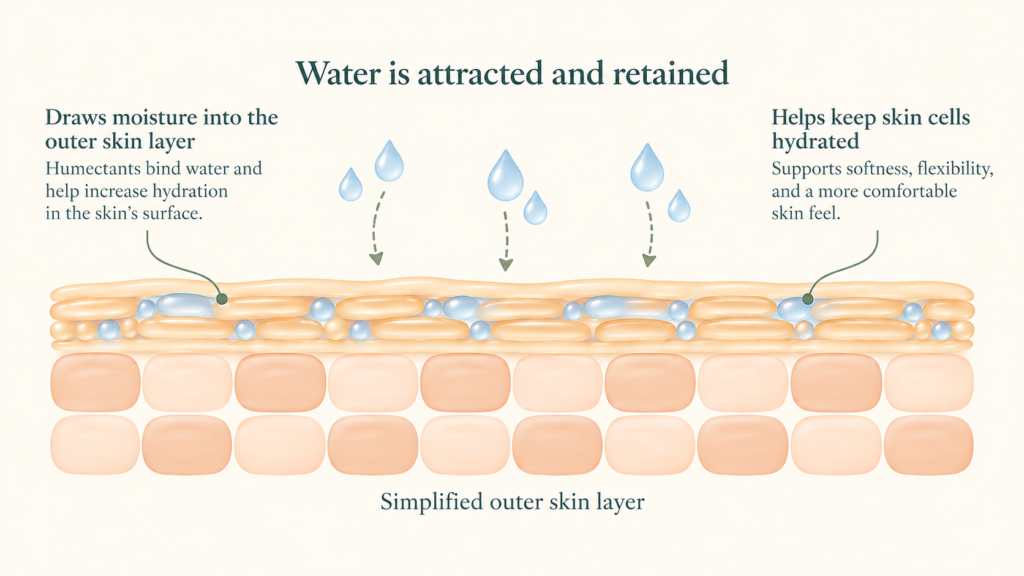
In a moisturizing cream, glycerin helps maintain water within the skin while emollient and occlusive ingredients provide complementary conditioning and moisture-retaining properties. Together, these functions allow a formulation to provide balanced hydration, skin conditioning, and moisture retention.
OUR FORMULATION PHILOSOPHY
Why Ecolibra Uses It
We chose vegetable glycerin for its well-established moisture-binding properties, skin-conditioning benefits, and ability to help maintain hydration without adding unnecessary heaviness to our formulations.
We specifically source palm-derived vegetable glycerin, reflecting our commitment to ingredient transparency and thoughtfully selected ingredients.
In our Face Cream and Hand Lotion, glycerin contributes moisture-binding properties alongside botanical butters and oils, helping keep skin feeling hydrated, soft, and comfortable.
In our Face Cleanser and Body Cleanser, glycerin complements cleansing agents and other conditioning ingredients, contributing to well-balanced formulas designed to cleanse the skin while helping maintain moisture retention and leaving it feeling soft, hydrated, and comfortable after washing.
Our approach is to combine ingredients with complementary properties, creating balanced formulations that help hydrate, nourish, and support the skin’s natural moisture barrier.
Good to Know
Although Ecolibra’s glycerin is derived from palm oil, the finished ingredient is not palm oil itself. During processing, glycerin is separated from the oil’s fatty acid components, producing a water-soluble compound with entirely different cosmetic properties.
Glycerin can also be derived from other plant oils, animal fats, or manufactured synthetically. Once properly purified, the glycerin molecule is chemically identical regardless of its original source.
Another distinguishing characteristic is that glycerin naturally occurs in human skin, where it contributes to normal hydration and moisture balance.
Despite its exceptional moisture-binding ability, glycerin is not an occlusive ingredient like shea butter or beeswax. For this reason, it is often combined with emollients and occlusives in moisturizing formulations to provide more complete moisture care.
At higher concentrations, glycerin can produce a temporarily sticky or tacky sensation. Its overall feel depends on the amount used and the other ingredients in the formula.
Although glycerin is generally well tolerated, individual skin sensitivity varies. Those with particularly reactive skin should introduce new products gradually.
EXPLORE ECOLIBRA
Found in our Products
Discover how rosewater works alongside other purposeful ingredients in our formulations.
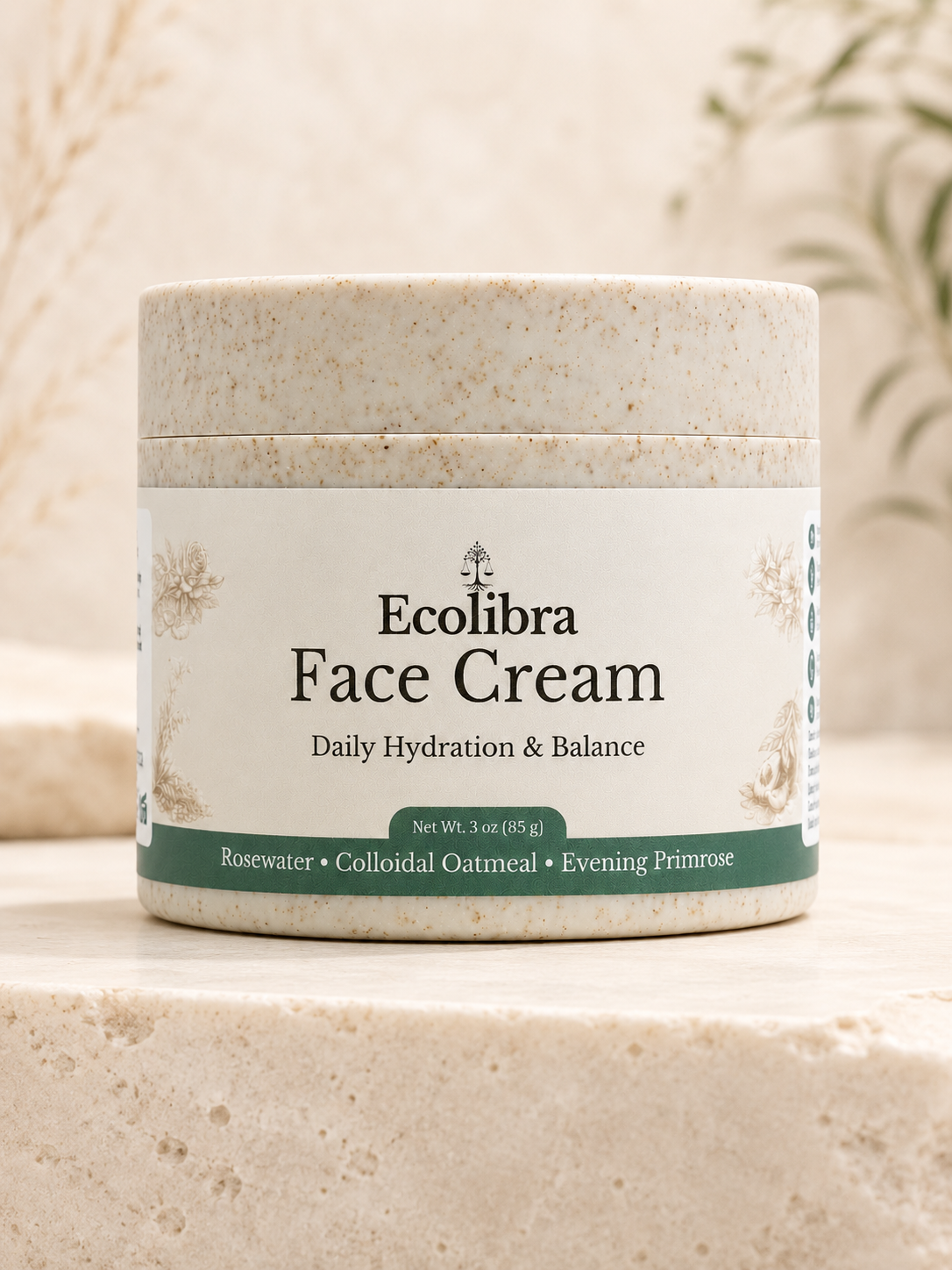
Face Cream
Lightweight daily moisturizing care designed to hydrate, soften, and condition facial skin.

Face Cleanser
Gentle daily facial cleansing designed to remove impurities while leaving skin soft and conditioned.

Body Cleanser
Gentle daily body cleansing designed to remove impurities while leaving skin soft and conditioned.

Hand Lotion
Lightweight daily moisturizing care designed to hydrate, soften, and condition hands.
Newsletter Updates
Subscribe for 10% off your first order and special offers.