Ecolibra = Natural Equilibrium
INGREDIENT PROFILE
Vitamin E
Tocopherol
Category: Formula Essentials & Aromatics
Functions: Antioxidant · Skin Conditioning
Used In Products: Body Butter, Face Cream, Barrier Balm
A fat-soluble antioxidant that helps protect botanical oils from oxidation while contributing antioxidant support and skin-conditioning properties to moisturizing formulations.
ORIGIN
Naturally Occurring in Plant Oils
SOURCE
Sunflower, Soybean & Other Vegetable Oils
TEXTURE
Thick, Oily & Amber-Colored
What Is Vitamin E?
Vitamin E is a group of naturally occurring, fat-soluble compounds found in many plant oils, seeds, nuts, and other botanical sources.
In skincare, Vitamin E is commonly used in the form of tocopherols, which are recognized for their antioxidant properties and ability to protect oils and other lipids from oxidative deterioration.
Vitamin E occurs naturally in several forms, including alpha-, beta-, gamma-, and delta-tocopherol. These compounds share a similar molecular structure but differ slightly in their chemical composition and antioxidant behavior.
For cosmetic use, tocopherols may be extracted and concentrated from vegetable oils or manufactured through other processes.
Unlike humectants, which attract water, or occlusives, which help reduce moisture evaporation, Vitamin E primarily works by interacting with unstable molecules known as free radicals.
These properties make it valuable in skincare formulations containing botanical oils and butters, where it contributes to antioxidant protection while complementing ingredients responsible for hydration and moisture retention.
SKIN BENEFITS
Benefits For Skin
Provides Antioxidant Support

Vitamin E helps neutralize certain free radicals that can contribute to the oxidation of skin lipids.
Its fat-soluble structure allows it to associate with lipid-rich areas, including the skin’s natural surface oils, where it can contribute antioxidant activity.
Supports Skin Conditioning

Vitamin E complements botanical oils and butters in moisturizing formulations, contributing to a soft, conditioned feel.
Its antioxidant properties also make it valuable in products designed to maintain the condition of skin exposed to everyday environmental stressors.
UNDERSTANDING THE INGREDIENT
The Science Behind It
Vitamin E’s antioxidant properties come from its distinctive molecular structure, particularly its chromanol ring and lipid-soluble hydrocarbon side chain. These two components work together, allowing tocopherols to interact with free radicals while remaining compatible with oils and other lipid-rich substances.
Chromanol Ring
Free Radical Neutralization

The chromanol ring is the portion of the tocopherol molecule responsible for its primary antioxidant activity.
It contains a hydroxyl group capable of donating a hydrogen atom to certain unstable free radicals, including lipid peroxyl radicals involved in oxidation.
When Vitamin E donates this hydrogen atom, it helps stabilize the free radical and interrupt the chain reactions responsible for lipid oxidation.
This process is particularly important because oxidation can spread through unsaturated fatty acids, affecting the quality of botanical oils and the condition of biological lipids.
By interrupting these reactions, tocopherols help slow oxidative deterioration.
Hydrocarbon Side Chain
Lipid Compatibility & Protection

Attached to the chromanol ring is a long, hydrophobic hydrocarbon side chain.
This portion of the molecule makes tocopherols fat-soluble, allowing them to dissolve in oils and associate with lipid-rich environments.
In cosmetic formulations, this enables Vitamin E to distribute throughout the oil phase, where it can interact with free radicals involved in the oxidation of botanical fats.
Its lipid compatibility is also relevant to the skin, where Vitamin E naturally occurs within lipid-containing structures, including cell membranes and surface oils.
Unlike water-soluble antioxidants, tocopherols are particularly suited to environments containing fats and oils.
How They Work Together
Vitamin E’s antioxidant properties depend on the complementary functions of its chromanol ring and hydrocarbon side chain.
The hydrocarbon side chain allows the molecule to remain associated with oils and other lipids, positioning the chromanol ring where oxidation reactions may occur. When unstable lipid-derived free radicals are present, the chromanol ring can donate a hydrogen atom, helping interrupt the chain reaction responsible for further oxidation. In skincare formulations, this helps slow the deterioration of susceptible botanical oils, which can otherwise develop undesirable odors and changes in quality over time.
On the skin, tocopherols can contribute antioxidant activity in lipid-rich environments, although the extent of these benefits depends on the formulation and how effectively Vitamin E reaches the relevant skin layers.
Unlike botanical oils and butters, Vitamin E is not primarily included to create a protective moisture-retaining layer. It also differs from humectants such as glycerin, which attract and retain water. Instead, Vitamin E complements these ingredients through its antioxidant properties.
Together, botanical oils, butters, humectants, and Vitamin E can provide complementary skin-conditioning and moisturizing functions while helping maintain the quality of the formulation.
OUR FORMULATION PHILOSOPHY
Why Ecolibra Uses It
We chose Vitamin E for its antioxidant properties, ability to help protect botanical oils from oxidation, and contribution to skin conditioning.
Because many of our formulations contain naturally occurring plant oils and butters, Vitamin E plays an important role in helping maintain their quality and supporting the overall formulation.
In our moisturizers and balms, Vitamin E works alongside plant oils and butters to help protect oxidation-sensitive lipids, particularly those found in our linoleic acid-rich oils, while complementing their moisturizing properties.
Our approach is to combine ingredients with complementary properties, creating balanced formulations that provide effective skin conditioning while maintaining the quality and purpose of each ingredient.
Good to Know
Vitamin E is not a single compound. It refers to a family of eight naturally occurring compounds, including four tocopherols and four tocotrienols. Different forms can have different chemical and antioxidant characteristics.
Vitamin E is also naturally present in many botanical oils. However, its concentration varies depending on the plant source, processing, and refinement. Adding concentrated Vitamin E allows formulators to introduce a more controlled amount into a finished product.
Vitamin E is an antioxidant, not a preservative. Although it can help slow the oxidation of oils and butters, it does not provide adequate protection against bacteria, yeast, or mold. Water-based products still require appropriate antimicrobial preservation.
Another important distinction is that Vitamin E does not completely prevent oils from oxidizing. Exposure to oxygen, light, heat, and other factors can still cause deterioration over time, making proper formulation, packaging, and storage important.
Tocopherol should also not be confused with tocopheryl acetate, a more oxidation-resistant Vitamin E derivative. Although both are commonly used in cosmetics, they have different chemical properties and do not perform identically in formulations.
As with any skincare ingredient, individual skin tolerance varies. Those with particularly reactive skin should introduce new products gradually.
EXPLORE ECOLIBRA
Found in our Products
Discover how vitamin E works alongside other purposeful ingredients in our formulations.

Body Butter
Rich daily moisturizing care designed to nourish and soften dry skin.
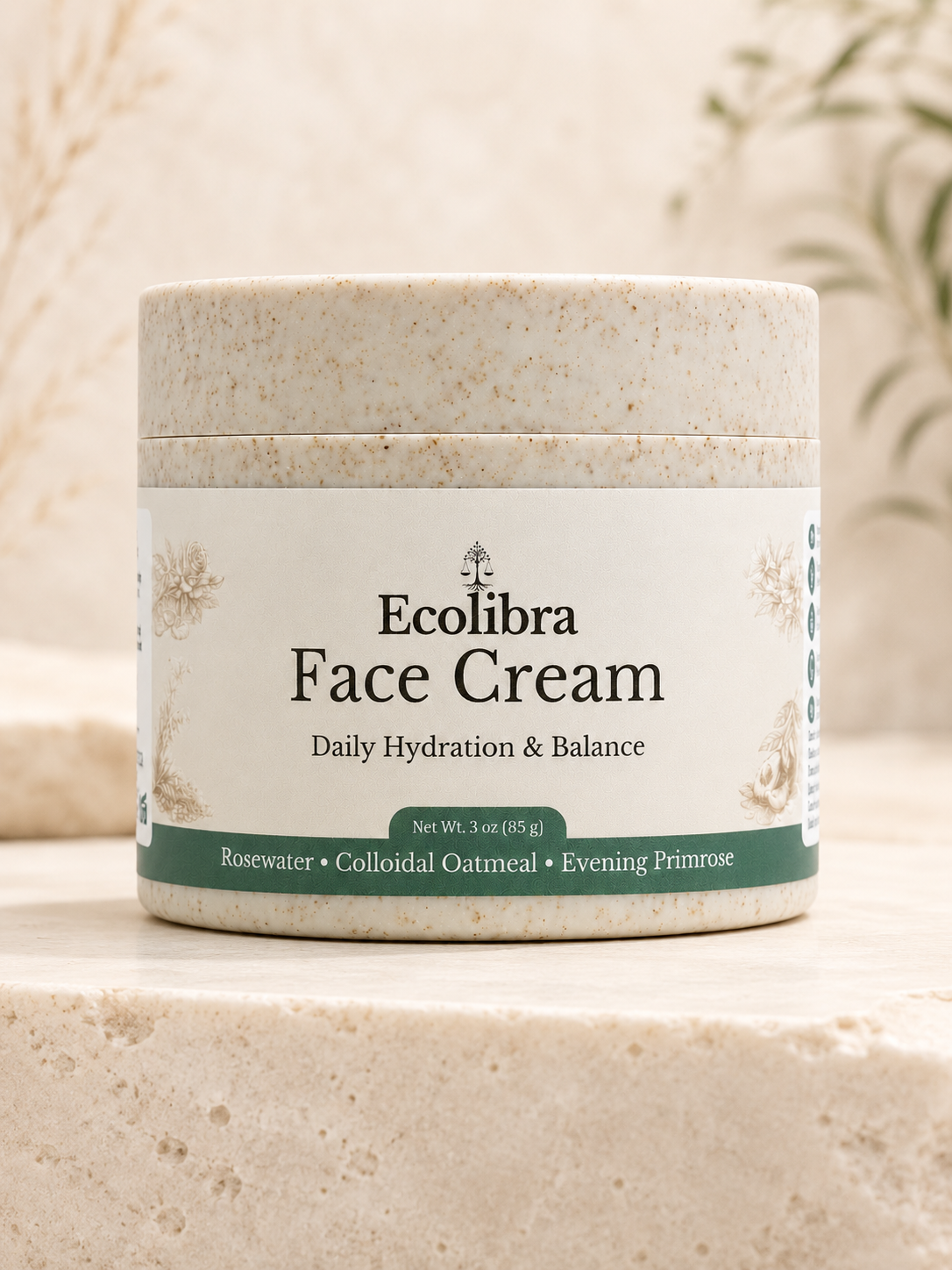
Face Cream
Lightweight daily moisturizing care designed to hydrate, soften, and condition facial skin.

Barrier Balm
Protective care formulated to help reduce moisture loss and soften dry, rough areas.

Hand Lotion
Lightweight daily moisturizing care designed to hydrate, soften, and condition hands.
Newsletter Updates
Subscribe for 10% off your first order and special offers.